“And if Christ has not been raised, our preaching is useless and so is your faith.” — Paul, 1 Corinthians 15:14, NIV
That’s quite an admission.
Paul was one of Christianity’s first missionaries—someone who travelled to other communities to tell people about Jesus. He understood that Christianity depended on Jesus rising from the dead. If Jesus was still dead, then everything Jesus said about himself was a lie.
I’m a Christian because I believe Jesus really did rise from the dead. He wasn’t simply brought back to life, like Lazarus, only to die again later. Jesus overcame death. He is still alive today.
But you’re entitled to ask why I—or anyone else—believes that. We need to explore and investigate what we believe, rather than simply take someone else’s word for it. That includes people we trust, respect, or look to for guidance. Their influence in our lives doesn’t put their beliefs beyond question.
Something doesn’t become true just because I believe it, and a claim this significant deserves more than just being told to have faith. Faith means putting our trust in evidence we can test.
What kind of evidence do we have?
With ancient history, we examine surviving writings, inscriptions, objects, and accounts from people connected to the events. We ask how early and reliable they are.
We weigh the balance of probabilities, asking which explanation best fits the evidence. We may not be able to remove every possible doubt, but we can still have enough evidence for drawing an informed conclusion about historical events.
But, dead people stay dead, or, when resuscitated, eventually die. The Christian claim is that God acted—and in raising Jesus from the dead, defeated death permanently. The question is whether there are good reasons to believe he did.
How close can we get?
The records we find in the Bible locate Jesus’ death during the rule of Pontius Pilate, the Roman governor of Judea. An inscription found at Caesarea in 1961 names Pilate and his office. That confirms part of the historical setting. The Roman historian Tacitus also records Jesus’ execution under Pilate, although he wrote much later.
Paul’s first letter to the Christians in Corinth dates to the AD 50s, within the lifetime of people who had known Jesus. In chapter 15, he reminds them of a message he had already received and passed on: Jesus died, was buried, was raised, and appeared to witnesses including Peter and James.
Paul also claims to have seen Jesus himself.
In another letter, Paul describes visiting Peter for fifteen days and meeting James, Jesus’ brother. He had direct contact with people who were central to what happened.
Whatever its precise date, this message predates Paul’s letter. It wasn’t invented centuries later.
P46, an early manuscript of Paul’s letters, preserves this passage. It is commonly dated around AD 200. That dates the copy, not the letter or earlier message.
Why put women first?
All four Gospels place women at the discovery of the empty tomb. Matthew and John also describe Jesus appearing to women before the male disciples.
That matters. Women’s testimony could be dismissed in that culture. The Jewish historian Josephus explicitly excluded women from legal testimony. That prejudice was wrong; women are just as capable of giving reliable testimony as men.
If you were inventing an account to impress people with those prejudices, why make women its first witnesses?
Luke even records the apostles dismissing their report as nonsense. The writers kept that uncomfortable detail too.
I think preserving the women’s central role makes better sense if they were reporting what happened. It is another reason to take these accounts seriously.
What did the witnesses do with their claim?
The first disciples devoted themselves to proclaiming that Jesus was alive. Acts describes the apostles being imprisoned, flogged and ordered to stop teaching about him. They continued. It also records the execution of James, John’s brother, and Peter’s imprisonment.
Paul’s own account is confronting. He describes repeated imprisonment, five occasions when he received thirty-nine lashes, beatings with rods, and times of hunger and exposure. He also says he declined financial support from the Corinthians, although he accepted help from other churches.
Outside the New Testament, the early Christian letter 1 Clement, usually dated to around AD 95, recalls the suffering and deaths of Peter and Paul.
Evidence varies for each disciple. But proclaiming this message clearly carried a substantial personal cost.
Of course, we can sacrifice ourselves for something that we believe to be true but isn’t. We see that in jihadist terrorists. But there’s an important difference here.
Someone can die for a belief they have been taught without knowing whether the events behind it actually happened. The disciples were testifying about events they had experienced themselves—Jesus’ life, his death and, most importantly, seeing him alive again. They knew whether those encounters had happened or whether they were making them up.
Their suffering gives us reason to take their testimony seriously. I find it incredibly unlikely that the disciples would knowingly maintain a fabrication through imprisonment and violence. Historian and New Testament scholar N. T. Wright also points to their willingness to suffer and die as evidence that they sincerely believed their testimony. That doesn’t, by itself, establish that they were right. But a claim that they knowingly invented it needs a very convincing explanation.
Paul had persecuted Christians. When he tried to join the disciples in Jerusalem, they were afraid and didn’t believe he really was a disciple. Barnabas had to speak for him.
What changed him from having Christians arrested and imprisoned to being willing to go to prison himself for those same beliefs?
Could another explanation fit?
Could someone have stolen the body?
A stolen body could explain an empty grave. It wouldn’t, by itself, explain why people believed they had encountered Jesus alive. If his followers stole it and invented the appearances, we would also need a plausible explanation for their willingness to suffer for something they knew was their own lie.
Could Jesus have survived the crucifixion?
Perhaps he fainted, was mistaken for dead, and recovered.
Mark specifically says Pilate checked with the centurion that Jesus had died before releasing his body. Tacitus also describes an execution.
Survival requires us to explain why those accounts are wrong and how a severely injured survivor persuaded people that he had defeated death. Someone needing urgent care would be evidence of survival.
Could the disciples have been deceived?
Knowing they were sincere doesn’t automatically mean they were right. Could someone have staged the appearances or convinced them that a surviving Jesus had risen?
These were people who knew Jesus. Luke describes encounters involving conversation, his wounds and eating in their presence. A deception theory needs to account for those reports, explain who arranged it and how, and offer evidence that it happened. It would also need to explain the purpose of the deception. What would the motive have been?
A deception is imaginable. That alone doesn’t make it the best historical explanation. I don’t find a reconstruction built on unverified assumptions more convincing than the evidence for Jesus’ resurrection.
Could the appearances have been hallucinations?
Bereaved people sometimes report seeing, hearing or sensing someone who has died.
But explaining a possible experience for one grieving follower doesn’t account for the range of reports. Paul describes appearances to individuals and groups. His own experience needs explaining too: he had been persecuting Christians, rather than mourning Jesus as a devoted follower.
I don’t think grief alone adequately explains the evidence.
Was it invented later for political reasons?
If that means resurrection belief was created by Constantine or at church councils such as Nicaea in AD 325, the dates don’t fit. Paul’s letters and P46 place it much earlier.
Belief in Jesus’ divinity also predates that council.
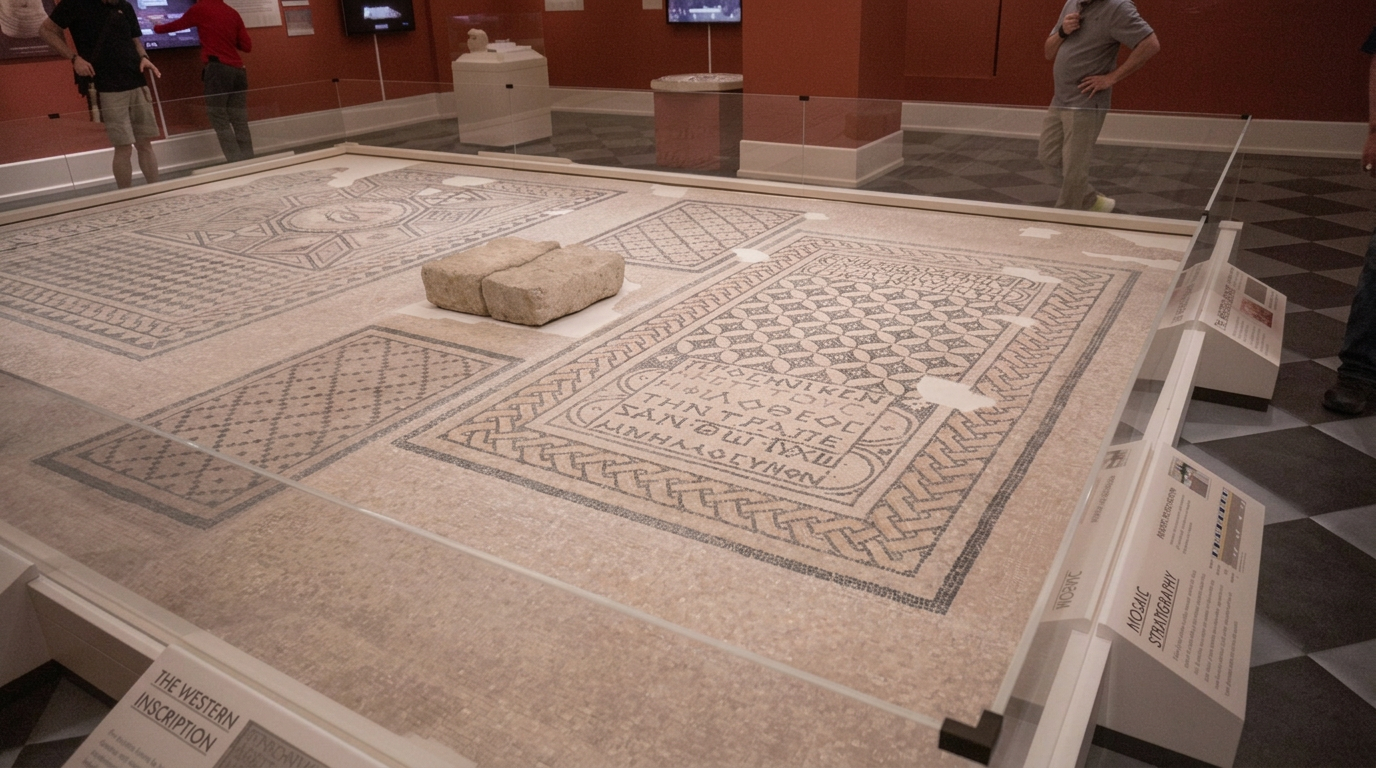
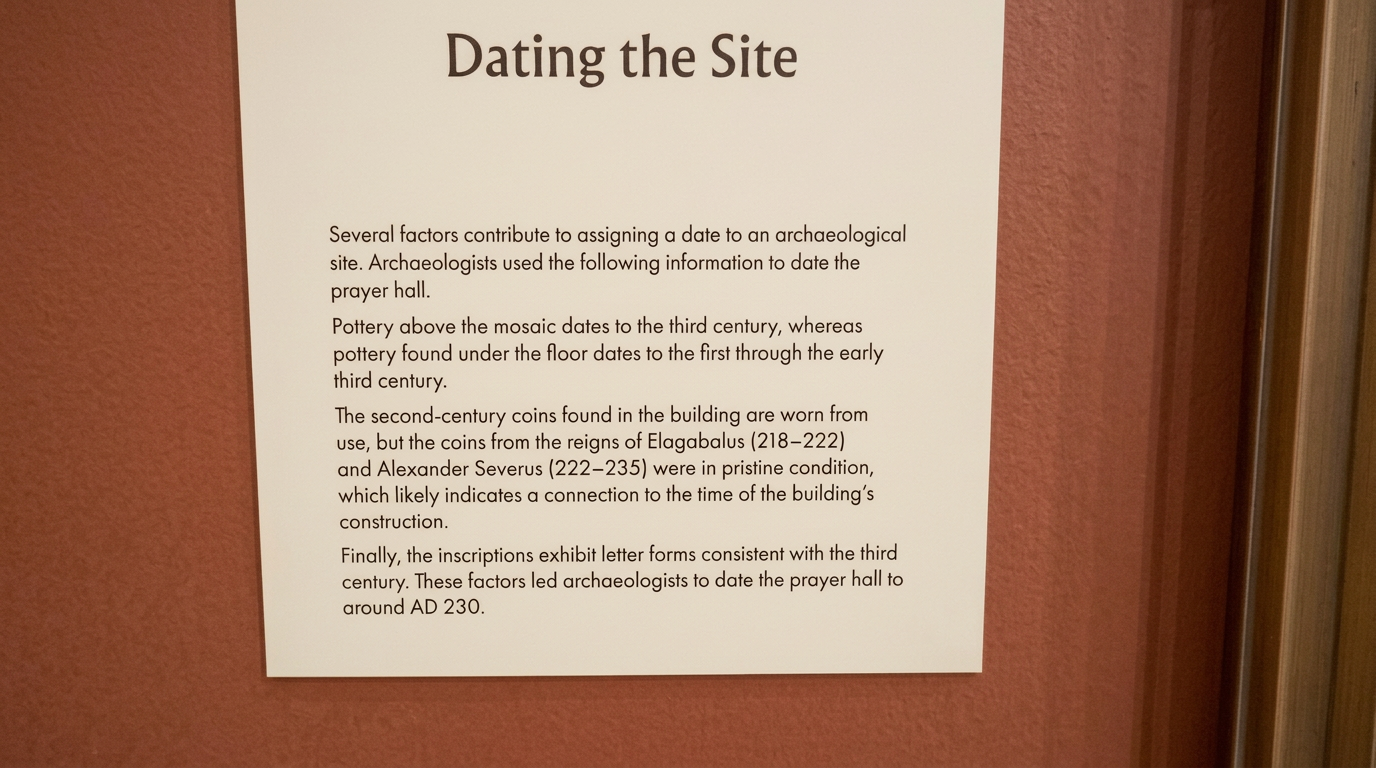
In September 2026, I saw the Megiddo Mosaic at Museum of the Bible in Washington, DC, and took my own photographs of it. Its inscription refers to “God Jesus Christ.” The museum dates the worship space to around AD 230.
An ancient Christian hymn from Egypt in the late AD 200s, explored in John Dickson’s documentary The First Hymn, also preserves words and music from early Christian worship.
These objects tell us about Christian belief and worship. They don’t independently prove resurrection. But they challenge the claim that worship of Jesus was manufactured by Constantine or the church councils from AD 300 onwards.
For the biblical evidence behind the belief that Jesus is God, see Why Jesus? and its Biblical Foundations.
Where does that leave us?
I believe Jesus really rose bodily from the dead and is still alive today.
That conclusion rests on the evidence taken together: the early proclamation, Paul’s contact with the first followers, the reported encounters, the burial and empty-tomb accounts, the women’s central role, and the costly commitment of people connected to the events.
I don’t think the alternatives explain the whole picture as well as the resurrection does.
Taken together, that evidence gives me good reason to believe Jesus rose from the dead. But what has made me a believer is meeting Jesus for myself through prayer and building a relationship with God through him.
You may still have questions. You don’t need to hide them. Explore the Evidence gives you the sources and further resources so you can investigate for yourself.
And it makes the next question personal. If Jesus really has overcome death, what might trusting him mean for you?